
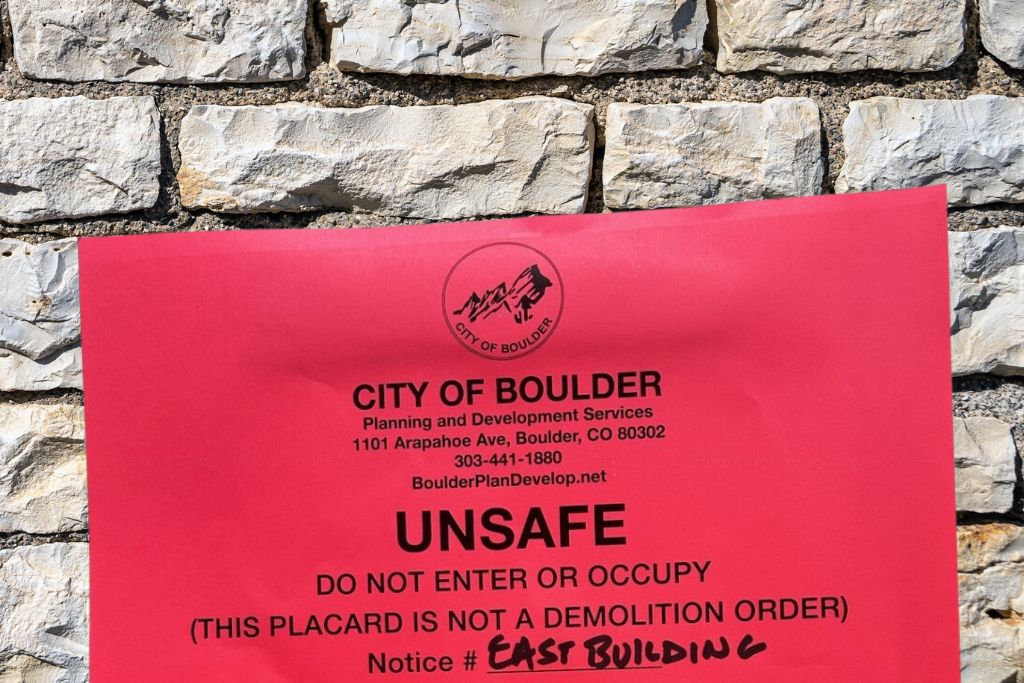
That neon red sticker on a Colorado front door is a legal stop sign. In our state, a red tagged house is the result of an official Order of the Building Official. It means the city or county authorities have stripped the property of its right to be occupied, effectively turning a house into a restricted zone overnight.
From shifting bentonite soils on the Front Range to the aftermath of the Marshall or Cameron Peak wildfires, our state’s unique landscape creates specific risks. Whether you are dealing with foundation code violations in a Denver bungalow or a furnace crack during a sub-zero January in the high country, the stakes for the property owner are high.
What Does Red-Tagged Mean in Colorado?
Officially known as a Notice of Unsafe Structure, a tag is issued when an inspector decides a building is a clear and inimical danger to human life. In Denver, this falls under Community Planning and Development (CPD). In El Paso County, the Pikes Peak Regional Building Department (PPRBD) handles these calls.
Local Triggers for the Tag
In Colorado, a red tag is not issued arbitrarily; it is a response to specific environmental and structural threats that render a building uninhabitable. While many factors can lead to a notice being displayed, several regional issues are more common in our jurisdiction due to our unique geography and climate.
- Reactive Soil and Foundation Failure: Expansive clay soils are a major local headache. If shifting ground causes building code violations like cracks wider than one-eighth of an inch, the International Building Code (IBC) mandates a tag.
- Wildfire Damage: Post-fire inspections in areas like Boulder or Larimer County often lead to immediate tagging. This prevents entry into soot-damaged shells where the fire department has determined the building may have compromised roof trusses.
- Sub-Zero Mechanical Hazards: A cracked heat exchanger in a furnace is a death sentence. If a utility provider finds a carbon monoxide leak, the house is often shut down for safety.
- Meth Lab Contamination: Under C.R.S. 25-18.5-102, properties testing positive for contamination are red tagged. They must stay empty until a certified industrial hygienist clears the remediation.
Can You Legally Live in a Red-Tagged House?
No. In Colorado, occupying a red tagged property is a violation of both state law and municipal rules.
The Immediate Fallout
When a property is red-tagged in Colorado, the transition from private residence to restricted zone is swift. The immediate fallout refers to the specific enforcement actions taken by the city to ensure no one remains in the structure.
- Forced Removal and Law Enforcement: Once the notice is displayed on the house, it serves as a legal directive. If residents refuse to leave, law enforcement or the local police department can conduct a mandatory evacuation. In such situations, officers are acting on the grounds that the property poses an immediate threat. For a family, this often means having only minutes to gather essential stuff and find a new place to stay.
- Utility Disconnection (The “Utility Pull”): To ensure the red tagged house remains empty, the jurisdiction will often request that companies disconnect services. This prevents secondary hazards, such as an explosion or fire. Without heat, water, or power, the house becomes physically impossible to live in, especially during winter.
- Stiff Daily Fines: Per C.R.S. 30-28-210, counties can impose civil penalties. As of 2026, many jurisdictions can fine a person $500 to $1,000 per day for illegal occupancy.
- Loss of Access: The property owner loses the right to enter at will. To get back inside to fix the building code violations, you must enter a formal process with the city, including obtaining a specific permit for repairs.
Accessing the Property: What is Permitted?
You cannot simply walk back in. Access is strictly controlled to prevent injury under these circumstances.
Repairs and Inspections
Only a licensed contractor or engineers with official limited entry approval can go inside for making repairs. You must contact the building department to secure written permission and a permit before any improvements begin.
Retrieving Belongings
A person can sometimes coordinate a supervised, brief entry to grab essentials. In disaster zones, the fire department or local deputy may require you to wear specific safety gear.
The Action Plan for Homeowners
The process of compliance starts the moment that tag is displayed. You must act in good faith to protect your title from municipal liens.
- Get the Official Report: Visit the city website or office to get the list of building code violations.
- Hire Colorado-Licensed Pros: You must have a Colorado Licensed Professional Engineer (P.E.) stamp your plans for structural repairs.
- Pull the Right Permits: Colorado is strict about electrical and plumbing permits. Handyman side work will likely result in a Stop Work order.
- The Re-Inspection: Once you fix the issues, the Building Official must sign off before the tag is removed.
Tenant Rights and Landlord Obligations
The Colorado Warranty of Habitability is a tenant’s primary protection. As of January 2026, the state has increased enforcement power through SB25-020, granting the Colorado Attorney General authority to prosecute a landlord who violates these standards.
- Rent Abatement: Under state law, tenants generally do not owe rent for any period the home is deemed uninhabitable.
- Relocation Assistance: If the condition threatens safety, the landlord may be required to provide assistance for a new place or a hotel room.
- Lease Termination: A tag gives the tenant the right to terminate the contract immediately.
- Legal Support: If you face a wrongful eviction, you should search for a local attorney or lawyer for advice on claims. Many attorneys offer a consultation to review your rent and housing rights.
Investor Risks and Real Estate Realities
Investors often eye a red tagged property in Aurora or Pueblo. However, these come with hidden liabilities.
- The Lien Risk: Unpaid municipal fines stay with the property. This can prevent a clean title transfer.
- The Freeze-Thaw Cycle: If a house is tagged and utilities are pulled during winter, burst pipes can turn a minor issue into a total loss.
Summary of Local Penalties
| Violation | Potential Colorado Consequence |
| Occupying after Tagging | Eviction and $500+ daily fines |
| Unpermitted Repairs | Stop-Work order and permit penalties |
| Tampering with the Tag | Misdemeanor “Defacing a Public Notice” |
Frequently Asked Questions
Is a red tag the same as a condemned building?
Not exactly. A tag is often temporary while the property owner is making repairs. Condemnation usually implies the building is slated for demolition.
Can I sell a red-tagged house in Colorado?
Yes, you can sell, but you must disclose the tag. Most lenders will not finance it, so you may be limited to cash buyers.
How long do I have to fix the issues?
Your deadline is set by the severity of the code violations. Emergency hazards require immediate stabilization within 24 to 72 hours. For non-urgent repairs, you usually have 30 days to secure a contractor and submit your plans. Don’t panic if the work takes longer – if you have a paid permit and can prove you’re working in good faith, your local jurisdiction will typically extend the window so you can safely fix the property.